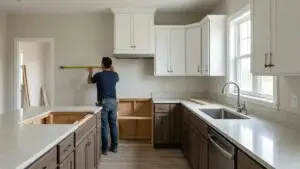
Why Accurate Cabinet Measurements Matter
Accurate measurements are the foundation of any cabinet design. Incorrect dimensions can lead to layout issues, ordering mistakes, and costly delays during installation.
Before selecting a cabinet line or finalizing a design, it is critical to understand the exact space you are working with.

What You Need Before You Start
- Tape measure (preferably 25 ft)
- Notepad or printed layout sheet
- Pencil
- Level (optional but recommended)
If possible, take measurements twice to confirm accuracy.
Step-by-Step: How to Measure for Cabinets
1. Measure Wall-to-Wall Dimensions
Measure the full width of each wall where cabinets will be installed.
- Measure at multiple points (top, middle, bottom)
- Note any variations
This helps identify uneven walls that may affect cabinet installation.
2. Measure Ceiling Height
Record the floor-to-ceiling height.
- Check in multiple locations
- Note any inconsistencies
This is especially important for full-height cabinetry and stacked designs.
3. Locate Fixed Elements
Identify and measure around:
- Windows
- Doors
- Appliances
- Plumbing locations
- Electrical outlets and switches
Include:
- width
- height
- distance from adjacent walls
4. Measure Depth Constraints
Standard cabinet depths may need adjustment based on:
- walkways
- islands
- appliance clearances
Understanding depth early prevents layout conflicts later.
5. Check Floor and Wall Conditions
Use a level to check:
- floor slope
- wall straightness
These factors directly impact cabinet installation and alignment.

Common Measurement Mistakes
- Measuring only once
- Ignoring uneven walls or floors
- Forgetting to include trim or molding
- Not accounting for appliance specifications
- Using estimated dimensions instead of exact measurements
These mistakes often lead to redesigns and delays.
When to Bring in a Professional
Even with accurate measurements, cabinet layouts require planning around construction conditions, product limitations, and installation requirements.
Professional design ensures:
- correct cabinet selection
- proper layout spacing
- alignment with installation conditions
Contact Us if we can assist with getting you in touch with one of our trade partners. If you are a contractor interested in becoming a trade partner, you can find out more here.
Download the Vanity Measurement Guide
For bathroom projects, accurate vanity measurements are critical for proper fit and installation.
Use our measurement guide to capture the correct dimensions before selecting your vanity or cabinet layout.

Final Recommendation
Taking the time to measure correctly at the beginning of a project prevents issues later in design, ordering, and installation.
Accurate information leads to better decisions, smoother installs, and more predictable project timelines.